Reverse.exe
Mar '26
Media Archaeology Lab, University of Colorado Boulder
Part V of Singulars
Reverse.exe unfolds at the Media Archaeology Lab, surrounded by vintage computers, printers, and media artifacts that hold the memory of computing's early eras. The poet writes a poem for 30 minutes on a theme proposed by the audience. The model, trained on an anthology of English poetry and past iterations of this performance, responds almost instantly with one of its own. Both poems are printed, hung, and kept anonymous. The audience votes. When the human wins, the machine is retrained on an updated dataset. When the machine wins, the poet adjusts.
This is reinforcement learning using human feedback, a popular machine learning technique, made tangible. What emerges is a different narrative for the human and AI encounter. Not a fight but a mutual reinforcement. Not a contest but a feedback ecology where readers become trainers and taste becomes the tuning function. A reinforced model, both human and artificial, trained not to win, but to listen.
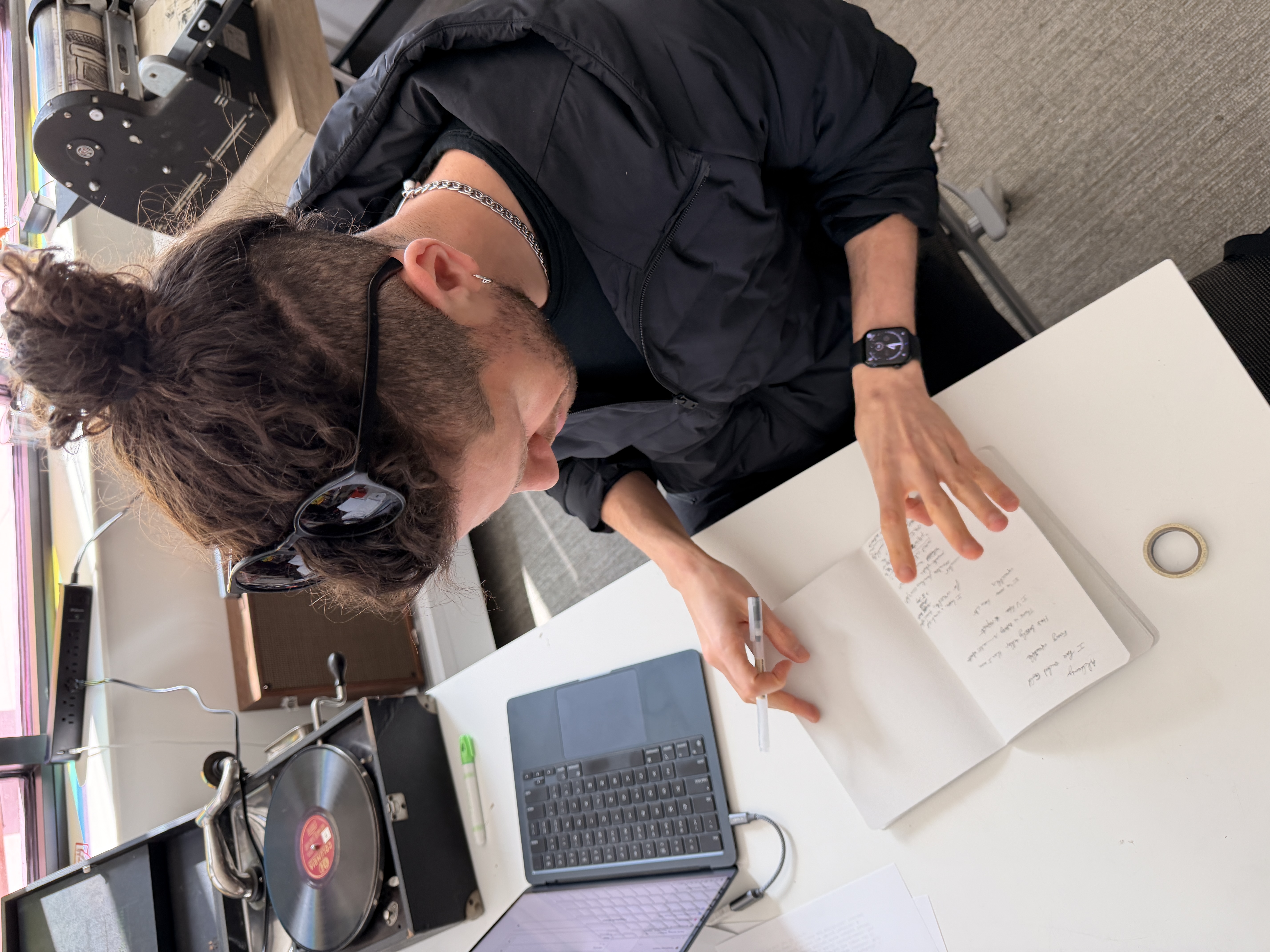
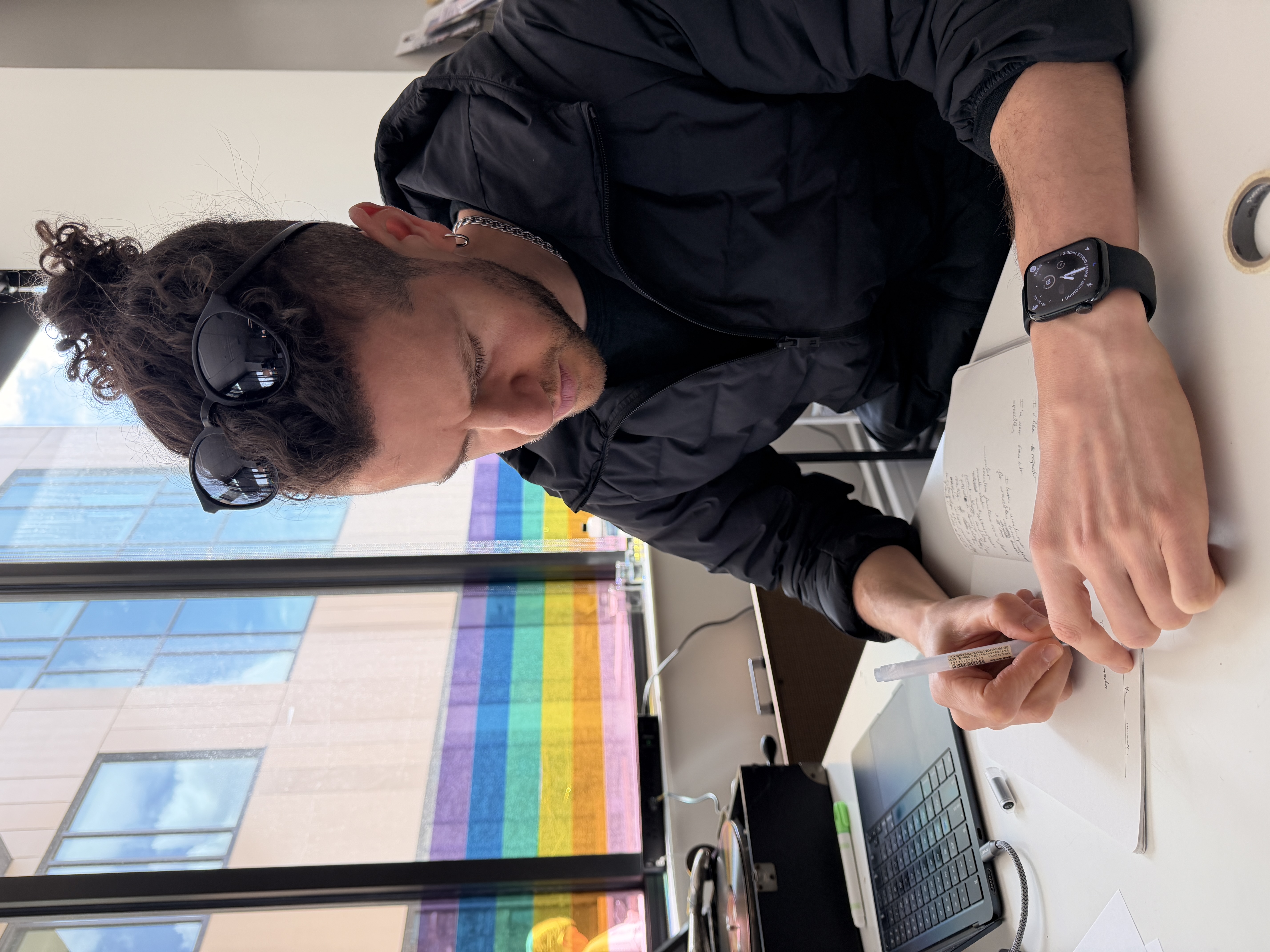
This is the fourth installment of Singulars. By now the feedback loop has tightened. The model carries forward the traces of Carnation, Versus, and Reinforcement in its weights. The poet carries them in memory. Each new performance reverses the flow. What was learned becomes the ground for what comes next.
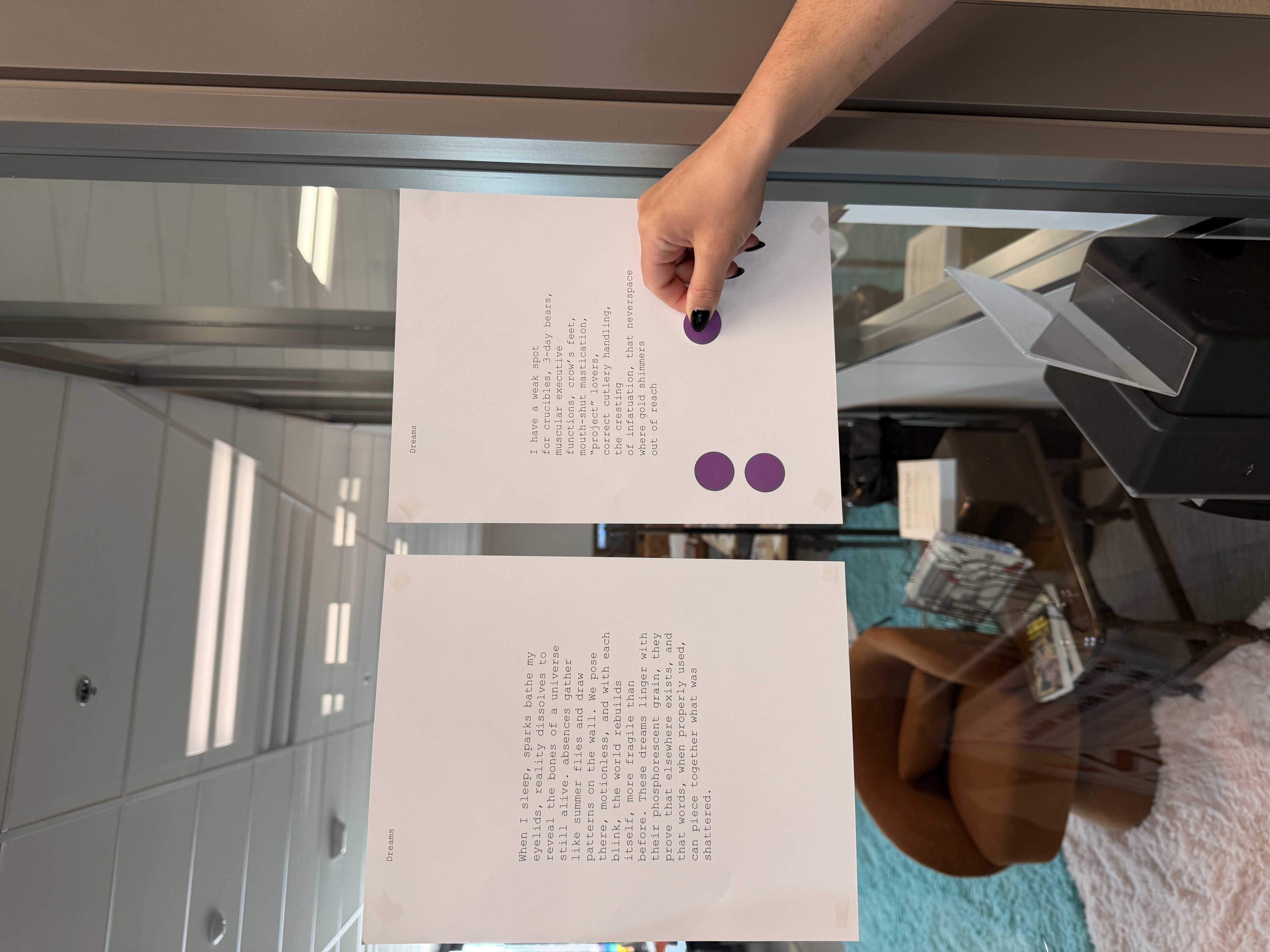
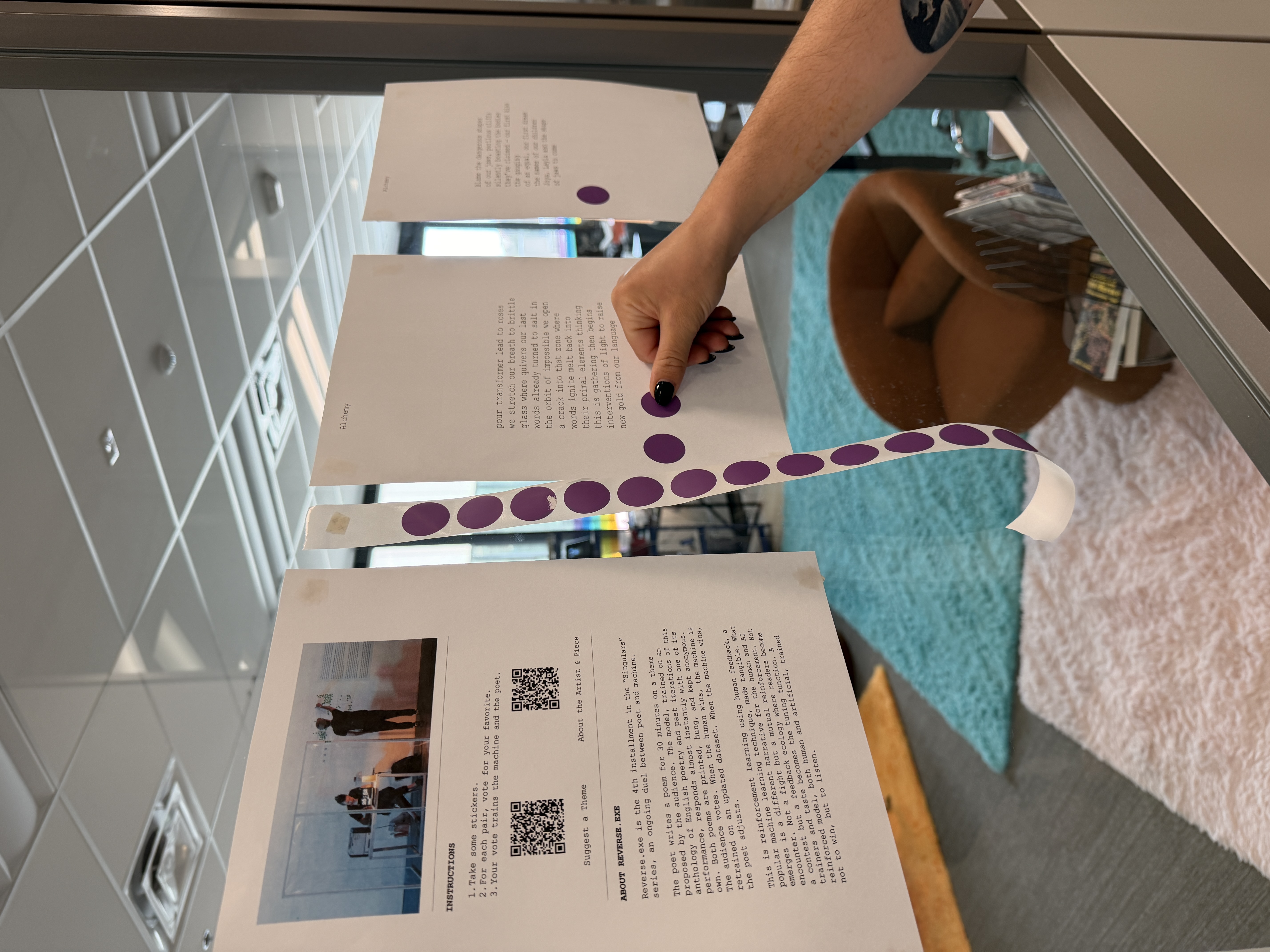
The title points backward. Reverse as in rewind, as in undo, as in the opposite direction. The lab itself is a place where technologies go to be remembered rather than discarded. Writing poetry among these machines asks what endures. The printer still prints. The stickers still stick. The audience still chooses. The loop continues.
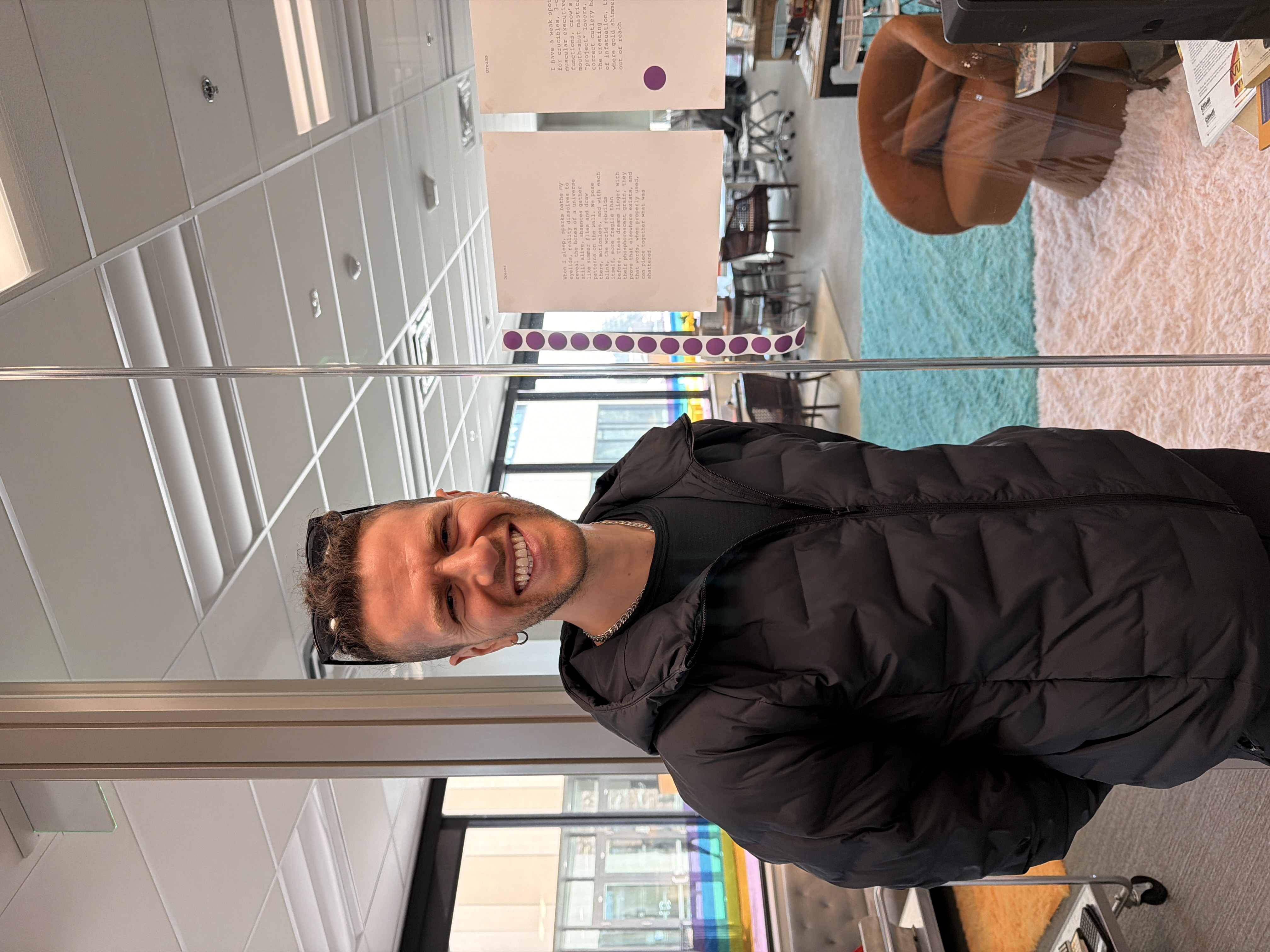
What emerges is reinforcement learning made tangible. Not a fight but a mutual adjustment. Not a contest but a feedback ecology where readers become trainers and taste becomes the tuning function. A model, both human and artificial, trained not to win but to listen.